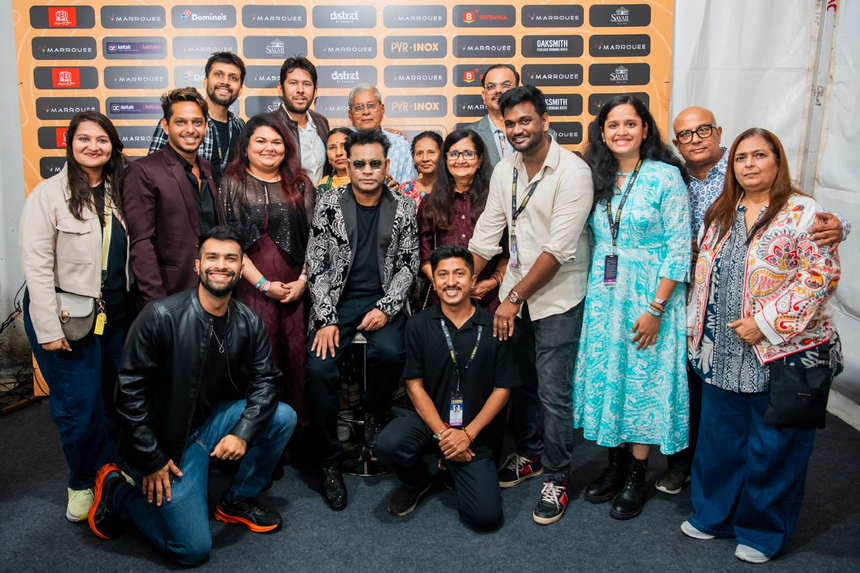
We ran the entire digital marketing campaign for A.R. Rahman Live in Pune at MCA Stadium on 23 November 2025. This article is not a retelling of that project. It is the way we would plan any live event, with that experience behind it. The full project is in the case study.
Start from the date, not the ticket link
A live event has one date. That single fact changes how you plan. A product can be advertised for months, and you can afford to test slowly. An event cannot. Whatever you learn in week six is useless if the show was in week five.
So write the calendar backwards. Mark the event date, then the date ticket sales must be healthy, then the date the announcement must be complete. Only then decide what content goes into each gap.
Four stages, four different jobs
Most event campaigns fail by using the same message all the way through. People need different things at different times.
- Announce. Make sure the right people know the event exists. A trailer or a line-up reveal works here. The goal is recognition, not sales.
- Convince. Show why it is worth their evening and their money. Who is on stage, what the night will feel like, what has been said by people they trust.
- Ask. Make the purchase path obvious. Clear dates, a working ticket link and a message that says what to do next.
- Last call. Remind people who showed interest that time is running out. This is the stage most often skipped and most often worth having.
On the Pune concert, the content moved from a trailer, through line-up content, to ticket-push reels. That is the same four-step logic, applied with creators.
Using creators without losing control of the message
For A.R. Rahman Live in Pune we shortlisted, briefed and collaborated with creators across Pune and Maharashtra. Three things made that work better than a single big push from the brand page.
- Pick creators whose audience is the audience you need. A creator with a large national following and no local audience will not fill a stadium in one city.
- Brief the outcome, not the script. Tell them what the event is, what you need people to do and by when. Let them say it in their own voice. Audiences can tell when a script was pasted in.
- Give each creator something to show. Access to the line-up, a preview or a moment nobody else has. A creator with something specific to share does better than one who repeats the announcement.
Where paid advertising fits
Paid ads are useful once you know what is working. Boost the content that people already respond to, and point it at a page that makes buying simple. Do not spend money to push a piece of content that has not earned any attention organically.
If your event is small and local, paid spend can be modest and tightly targeted. If you need people from several cities, budget for the additional creative that each audience needs. Our performance marketing page explains how we structure and report on paid campaigns.
What to track, and what to ignore
Reach tells you how many people saw something. It does not tell you whether anyone bought a ticket. Track what sits closest to the goal.
- Clicks to the ticket link, and how many of those become purchases.
- Which creator or ad the ticket buyers came from, where the ticketing platform allows it.
- Saves and shares on announcement content, which are early signs of intent.
- Comments asking practical questions. Each one is a barrier you can remove.
Reach still matters. The Pune campaign reached 40M+ people. But it is a starting figure, and it should never be the only line in the report.
A one-page planning checklist
- Event date, on-sale date and the date by which sales must be healthy.
- One sentence saying who the event is for.
- Content planned for each of the four stages.
- A shortlist of creators and a written brief.
- A ticket page that works on a phone, with tracking set up before launch.
- A named person who answers questions from the public, quickly.
- A reporting rhythm agreed in advance.
If you are planning something
If you are planning a concert, festival, film release or launch, we can look at your date and your goal and tell you what we would do first. See campaign strategy and execution or talk to us.